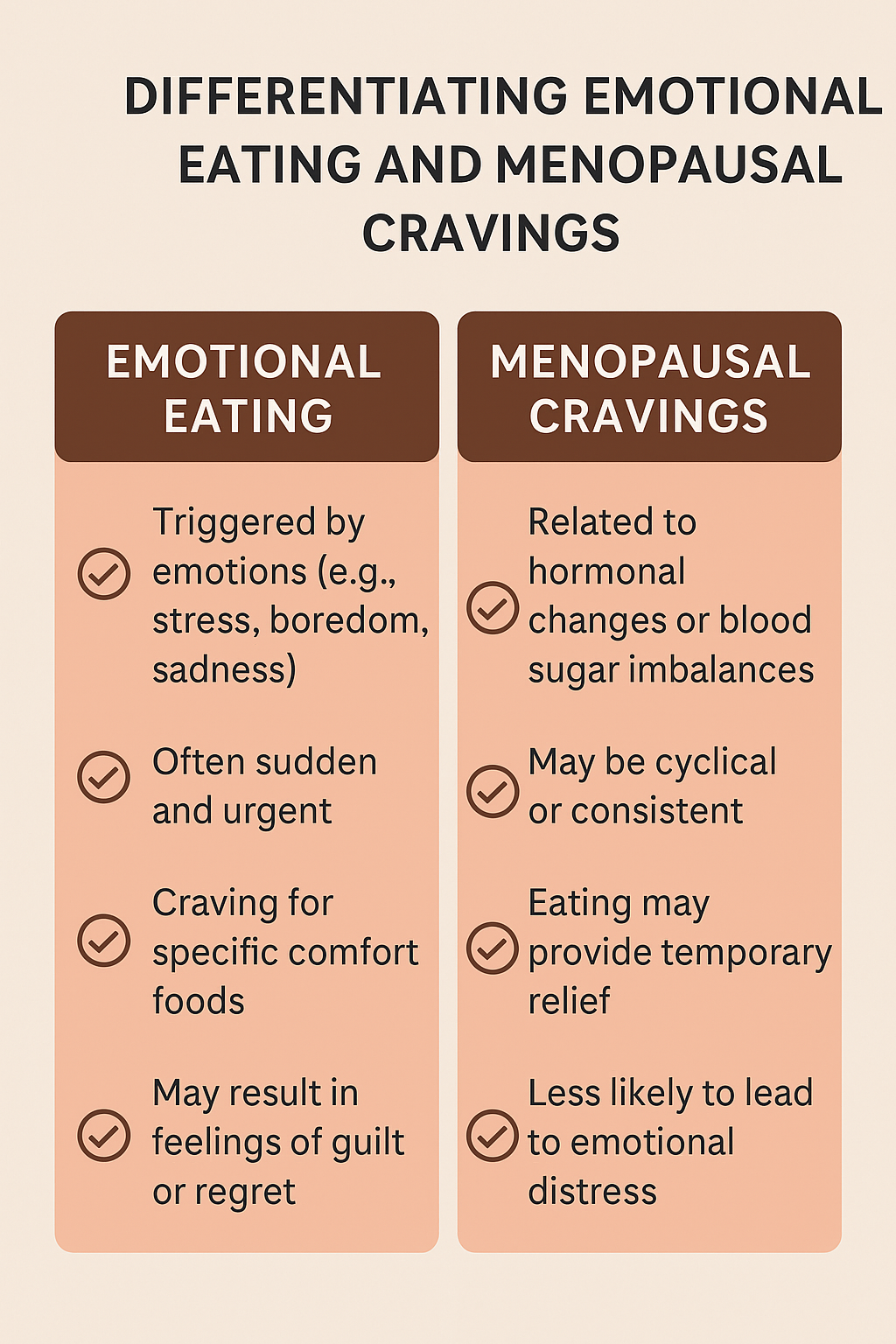
Emotional Eating vs Menopausal Cravings
What is Emotional Eating?
When food is used to assuage emotional needs but ultimately results in guilt and shame. Emotional eaters:
Eat impulsively and cannot control when and how much they eat.
Are unable to change their behaviour or explain what happens to them.
Find themselves in a loop – wanting the end result to occur but not actually wanting to change, e.g. want to be slim but also be spontaneous in their eating.
Feel that a life without the favourite food would be dull and joyless.
How can we tell the difference between hormonal related cravings for chocolate or other foods and emotional eating?
1. Trigger: Emotional vs. Physiological
The key is to look for the trigger. Is it an emotion – stress, boredom, loneliness, sadness or even celebration? Is it sudden and urgent, not tied to physical hunger? or is it in the case of menopausal cravings related to hormonal shifts like fluctuating estrogen or serotonin, blood sugar imbalances, or nutrient deficiencies (e.g. magnesium). The cravings may feel intense but tend to come more cyclically or consistently.
2. Timing and Patterns
Emotional eating often happens during or after an emotional event, or at certain habitual times like evenings or after work, whereas menopausal cravings may have a more predictable rhythm – mid afternoon energy dips, or linked to skipped meals or poor sleep.
3. Sensation and Satisfaction
Emotional eaters tend to crave very specific comfort foods often high in carbs, sugar and fat, and often even after eating them the emotional need remains. Whereas with menopausal cravings, eating the sweet or chocolate might actually help relieve the feeling temporarily, especially if it’s due to low blood sugar or serotonin dips.
4. Aftermath
After emotional eating, there’s a feeling of guilt or regret and sometimes shame. After physiological cravings, there may be a sugar crash but less emotional turmoil, unless it is tied up with dieting mindsets or body image concerns.